
After Image
Alexander Berggruen Gallery. NY
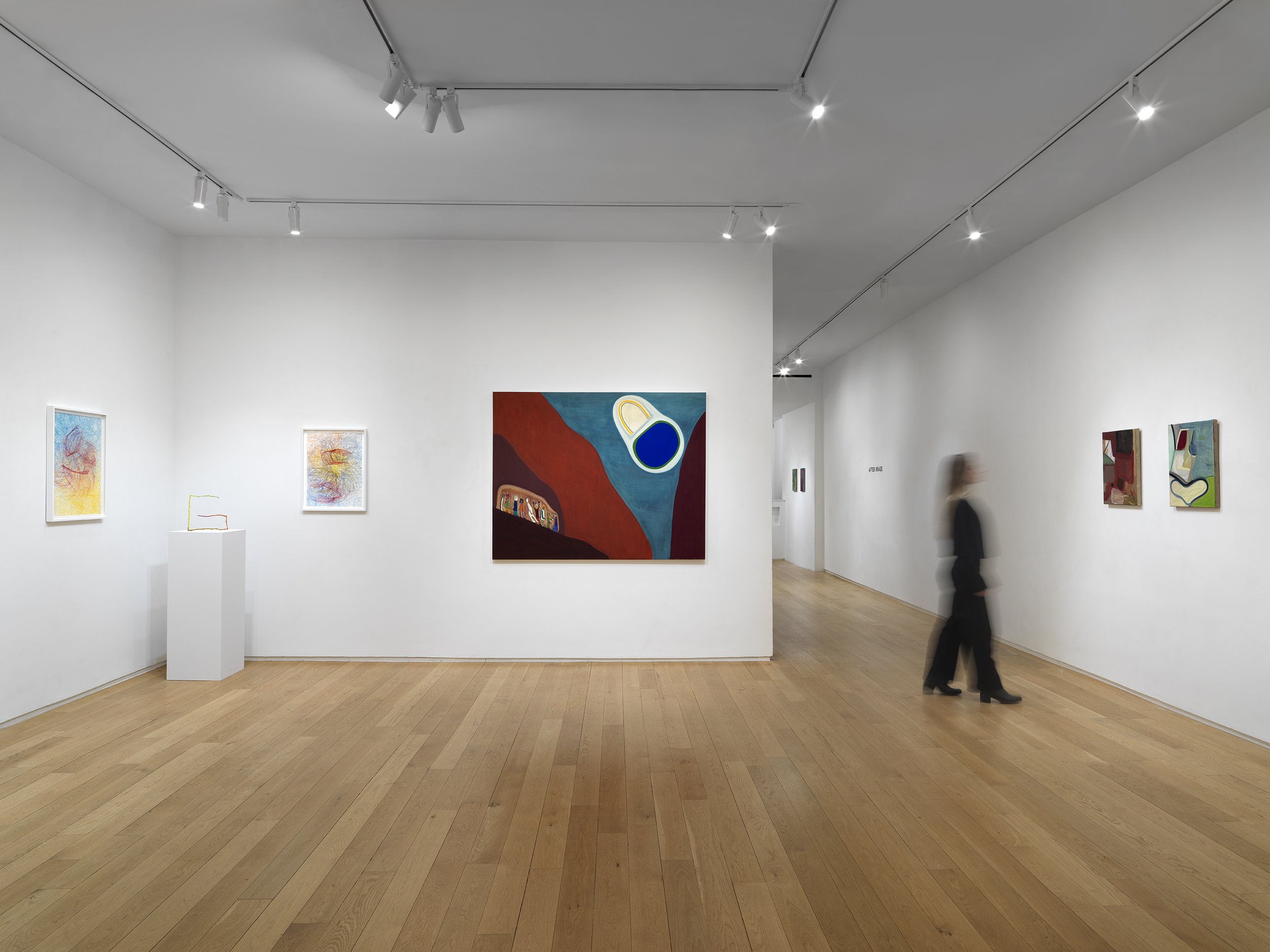
After Image brings together artists of varied geographies and approaches, each working in distinct modes of abstraction—some from reality, some from intuition, and others through a synthesis of the two. For several artists, abstraction begins with observation. Reality is distilled and transformed onto the flat surface or into sculptural form, revealing how representation can drift from the realities it once described. This recalls Jean Baudrillard’s notion of the image’s separation from its referent, a condition increasingly evident in our image-saturated world. Conversely, other artists begin from intuition rather than observation. Artists working in this way often emphasize physicality and the sensory familiarity of form. After Image evokes visual residue and artistic legacy, each contributing to an image’s enduring power.
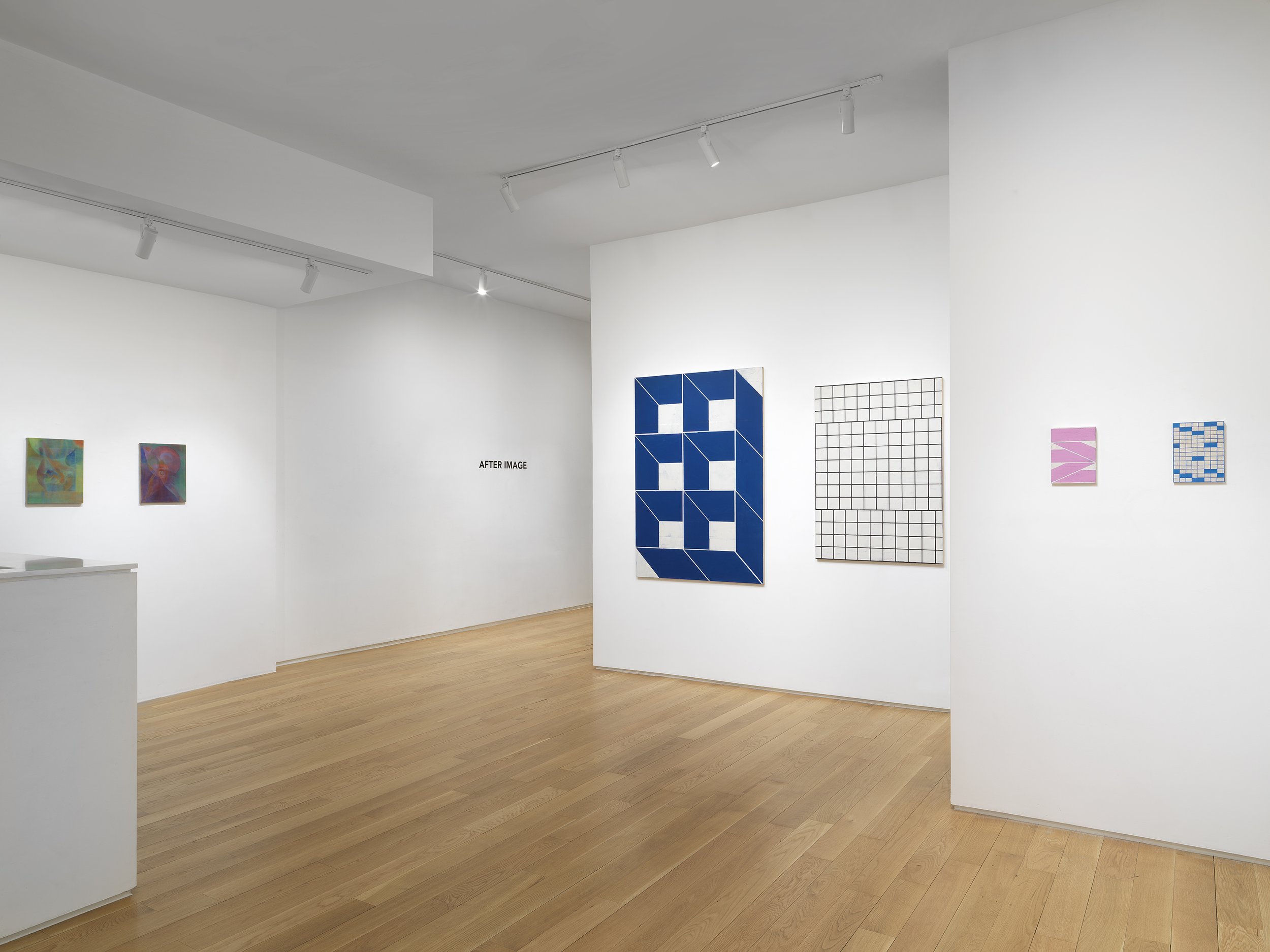
Alain Biltereyst’s paintings draw on the visual codes of public space, such as city truck designs, packaging, and architectural motifs. His work translates this utilitarian visual language into subtle abstractions where stripes, lines, shapes, and colors are arranged with rhythm and compositional balance. Exploring how the ideals of Modernism have penetrated everyday life through design and mass production, Biltereyst juxtaposes clean, precise forms with a painterly approach. Traces of earlier brushstrokes appear throughout. Here, Modernist formalism meets the messy vitality of popular culture. In Emily Hall’s words for Artforum, “as signs that don’t seem to want anything from us, these paintings offer small, fierce, cheerful—and poetic and simple—moments of resistance” (1).
Azadeh Elmizadeh draws inspiration from the natural world, compounding her paintings with references to history, myths, and fables. Geometric forms seep into one another and gesture towards a glimpse of a birdlike figure, evoking transcendent flight. The colors in her work recall those found in nature, color field painting, and vibrant Persian miniature paintings. Working on the canvas at various times and locations, she presents multiple temporalities and references at once, connecting ancient storytelling with the present natural world.
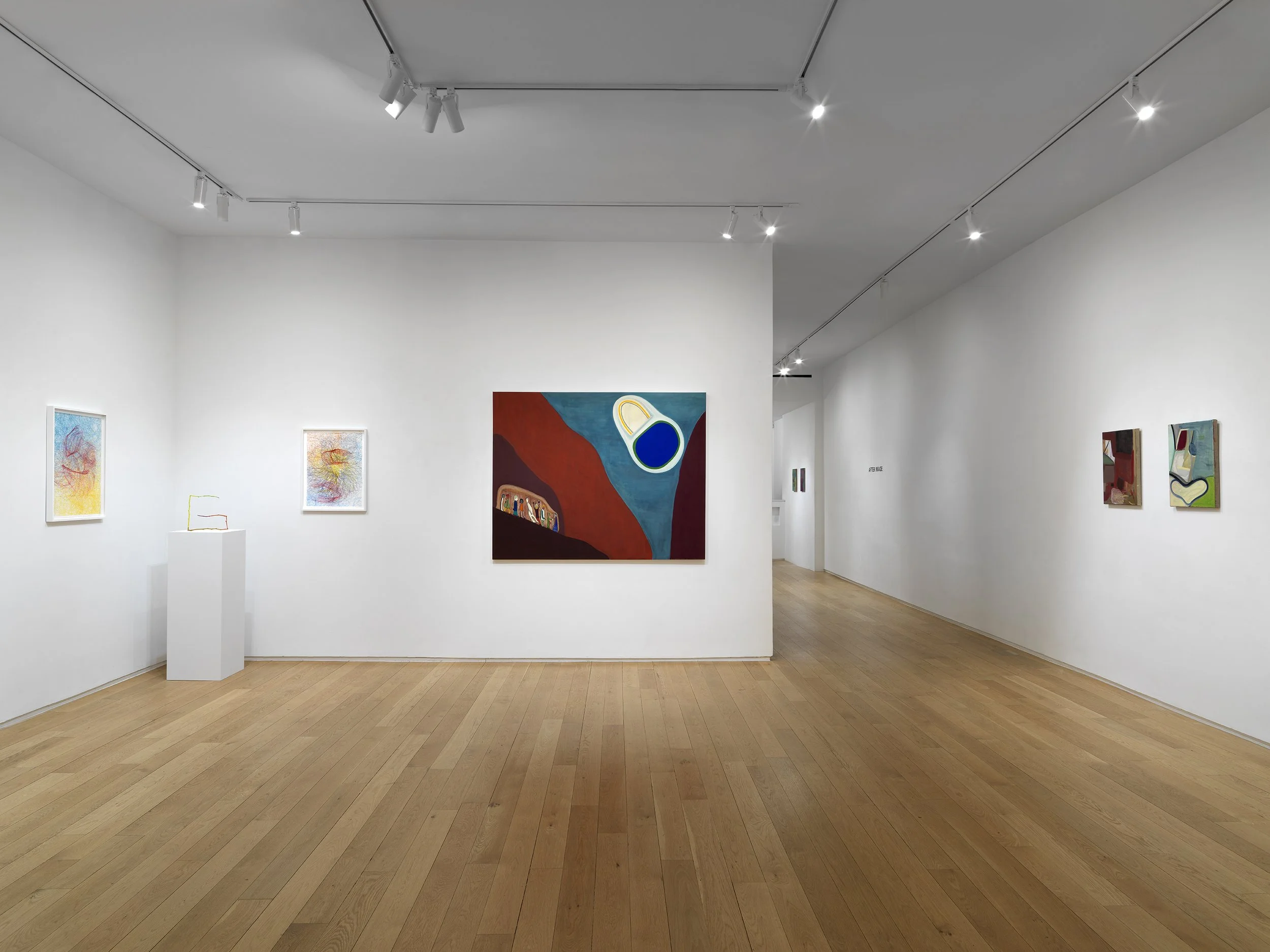
Evan Holloway’s work points to the complex natural structures that underpin reality, translated in many forms of media, primarily sculpture. The knobby rods that make up his sculpture One and Two recall the shape of twigs, while their composition gestures toward a cube. His works on paper are made by marking paper with ink while it is rotated on a turntable. The freedom this automatic procedure introduces recalls the patterns—and patterned chaos—that exist at every level of nature. Rendered in exuberant color, his work insists on the physical object as the site of an artwork’s meaning.
Paul Kremer’s paintings feature shapes that he generates from his spontaneous sketches and his archive of past works. The artist adapts these intuitive shapes to new contexts, engendering novel interpretations. Kremer’s visual logic is rooted in, in his words, “a unified but endlessly variable set of possibilities for new works, based on a process that allows for both creation and re-use, as well as generation and derivation.” Kremer achieves his hard-edged, flat, modernist style with a blend of wet, yet opaque acrylic paint that drips down the edges of his canvases, striking a balance between controlled mark-making and seemingly-spontaneous motion on all four edges. Looking at the negative space, the figure-ground relationship can fall apart as a viewer finds the imagery transformed into something else.
Anna Kunz makes luminous, vibrant paintings with an emphasis on color, material, and process. Her practice thoughtfully considers a viewer’s experience, taking into account—with deep awareness and intentionality—how each work, each gesture, affects the exhibition space and, by extension, a viewer. Charged optical relationships emerge. Color intervenes and signals alarm, but ultimately Kunz’s embrace of vibrant color offers positivity. Her paintings leave an optical imprint with a viewer, whereby in the artist’s words, “The immediate, visceral experience of color can leave a lasting impression, bringing one’s sense of perception into awareness. It reveals as much about absence as it does about presence.” The artist uses painting to suggest a way of looking (and being in the world) that privileges sensation over interpretation, grounding a viewer in the present moment while also offering multiple perspectives.
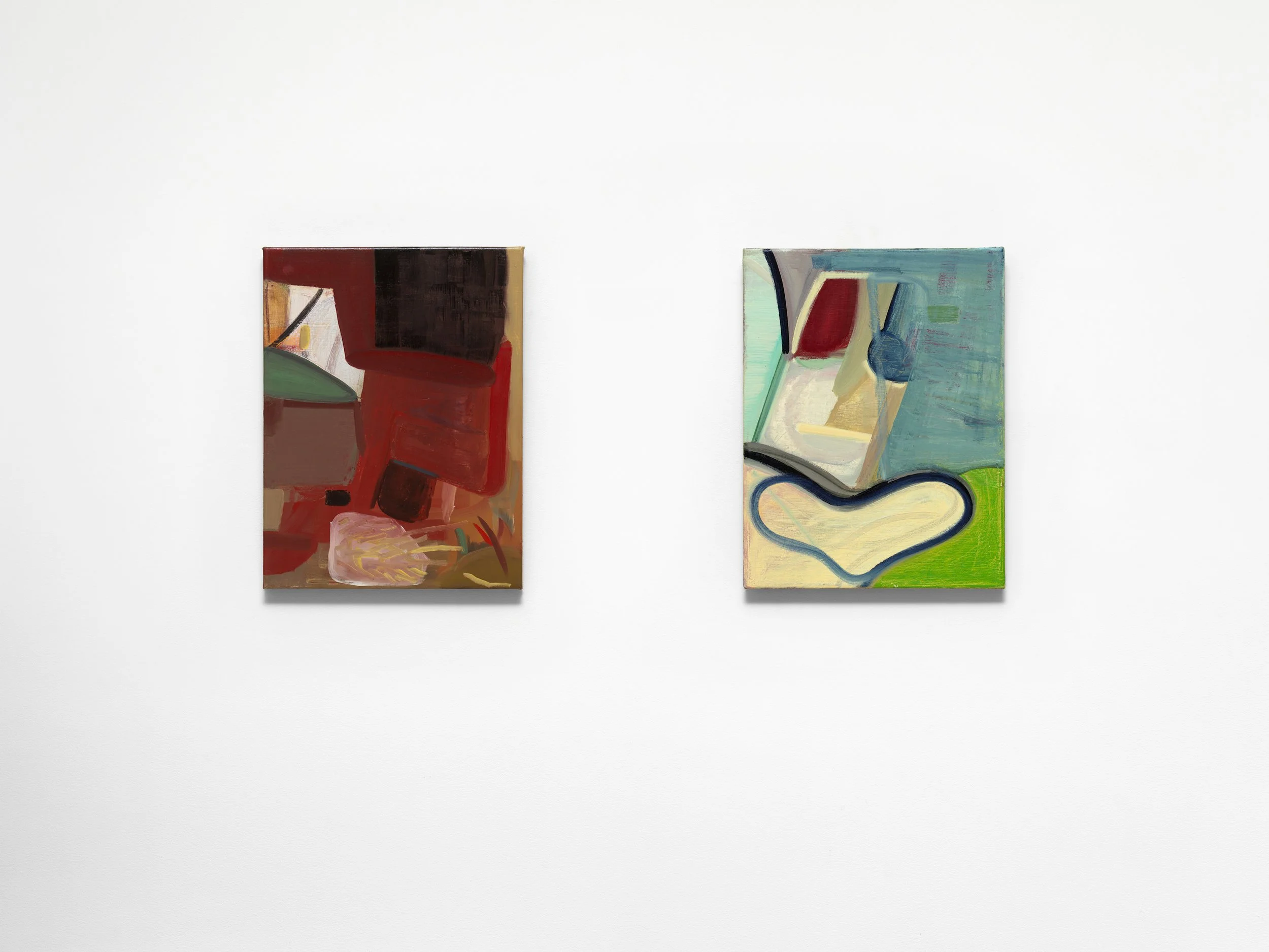
Vicente Matte’s paintings maintain their references while concentrating on their formal and psychological properties. The figure is preserved even as, in the artist’s words, he “allows the forms to go as far as possible in the search of an inexplicable adaptation.” His painting Great Conjunction depicts an astronomical event of the same name between Jupiter and Saturn that he witnessed from his home in Santiago, Chile. This abstract landscape collapses vast distances and scales into distinct geometric shapes and cross layers as a group of figures huddles in the lower left register. Pushing the forms even further, his two Untitled paintings in this exhibition retain traces of the human face despite being refined into geometry. Matte’s search for meaning exposes a precarious balance between shape and context.
H. E. Morris paints forms and lines that at times appear to follow a structure, and at other times appear to collapse into gestural, blended veils and swarms. The artist considers her work to be a site of conflict navigation, which she thinks of in two different ways. First, she cites Cézanne’s method of working: an artist must search for “catastrophe” to start anew after the collapse of reality’s framework. Second, she encounters conflict when approaching a painting by taking on, in her words, “the role of the witness to the world,” following her own subjective interpretation. In Eclipse, for instance, painted, overlapping fabrics create a shifting surface that induces areas of blur and dynamic perceptual movement. As a viewer moves around the work, color and mark shift with the light. She explains, “The mark making provides evidence of both working with and against the color palette, suggesting where and when a conflict is arising.”
Employing abstraction to engage vision and thought, these artists signal how images persist and transform.
(1) Emily Hall, “Alain Biltereyst,” Artforum, Vol. 53, No. 2, October 2014.
Press release by Kirsten Cave, adapted from the artists’ statements.
Installation Views (Selected)
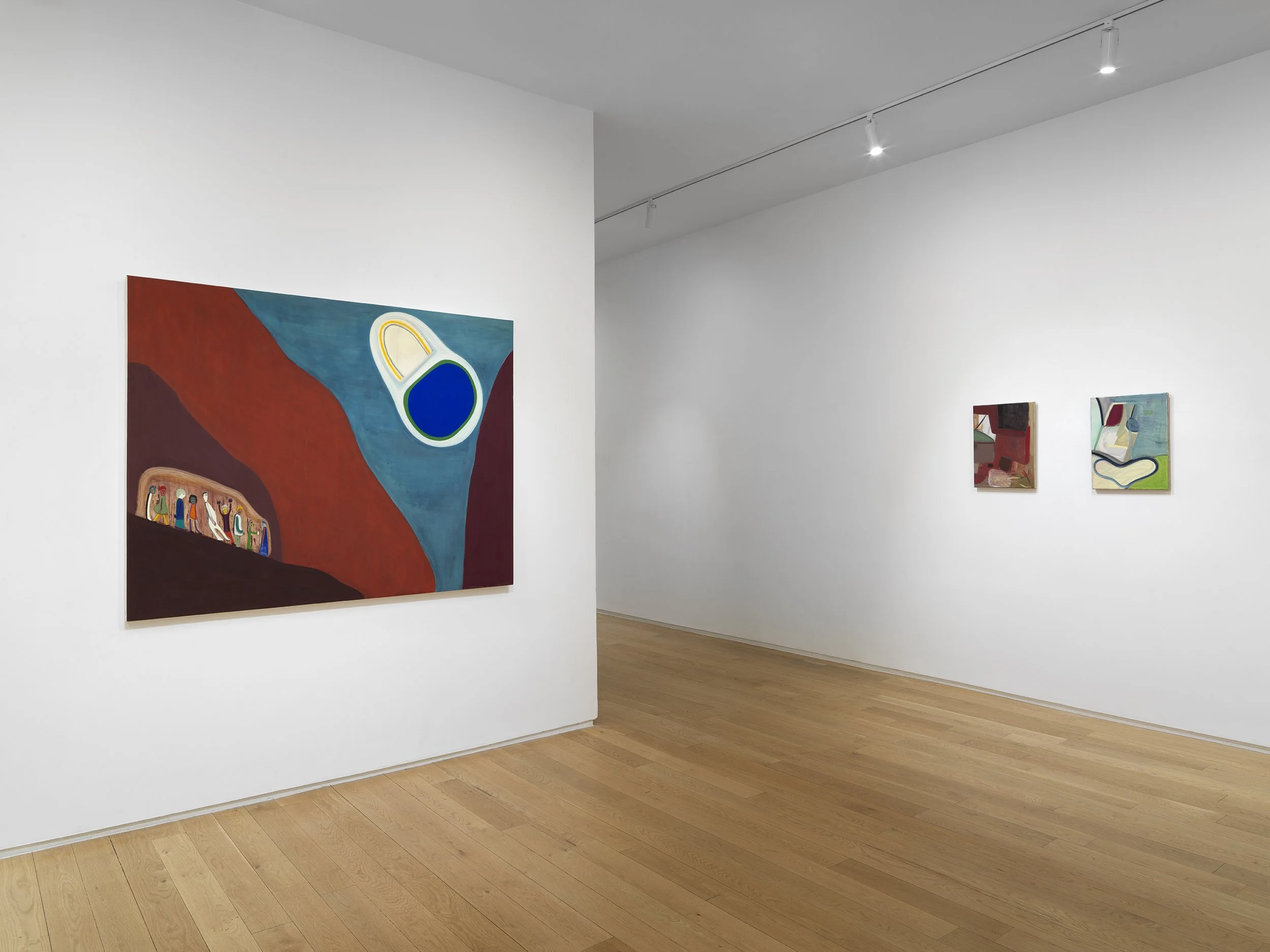
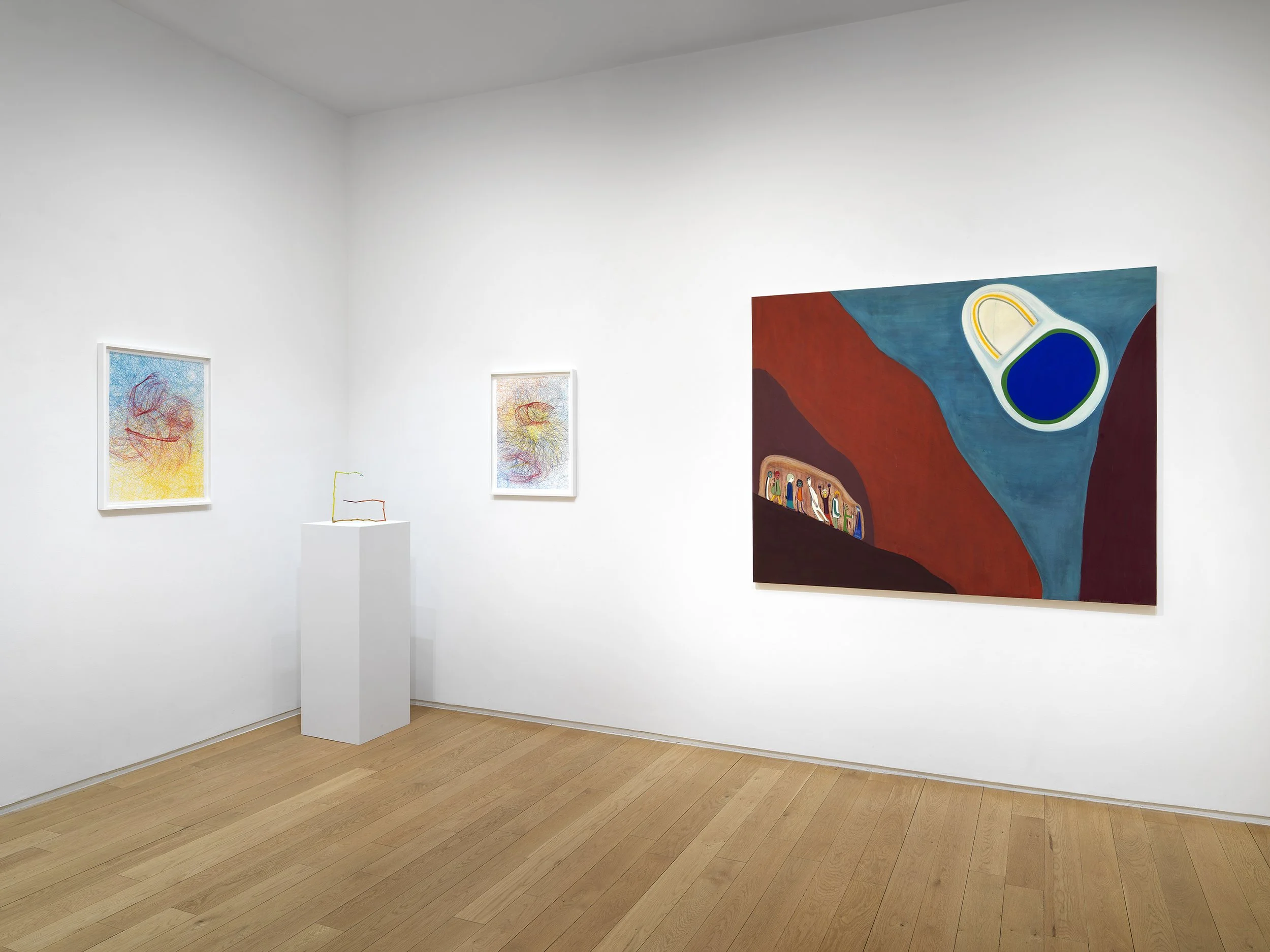
Photos: Dario Lasagni
Selected Works
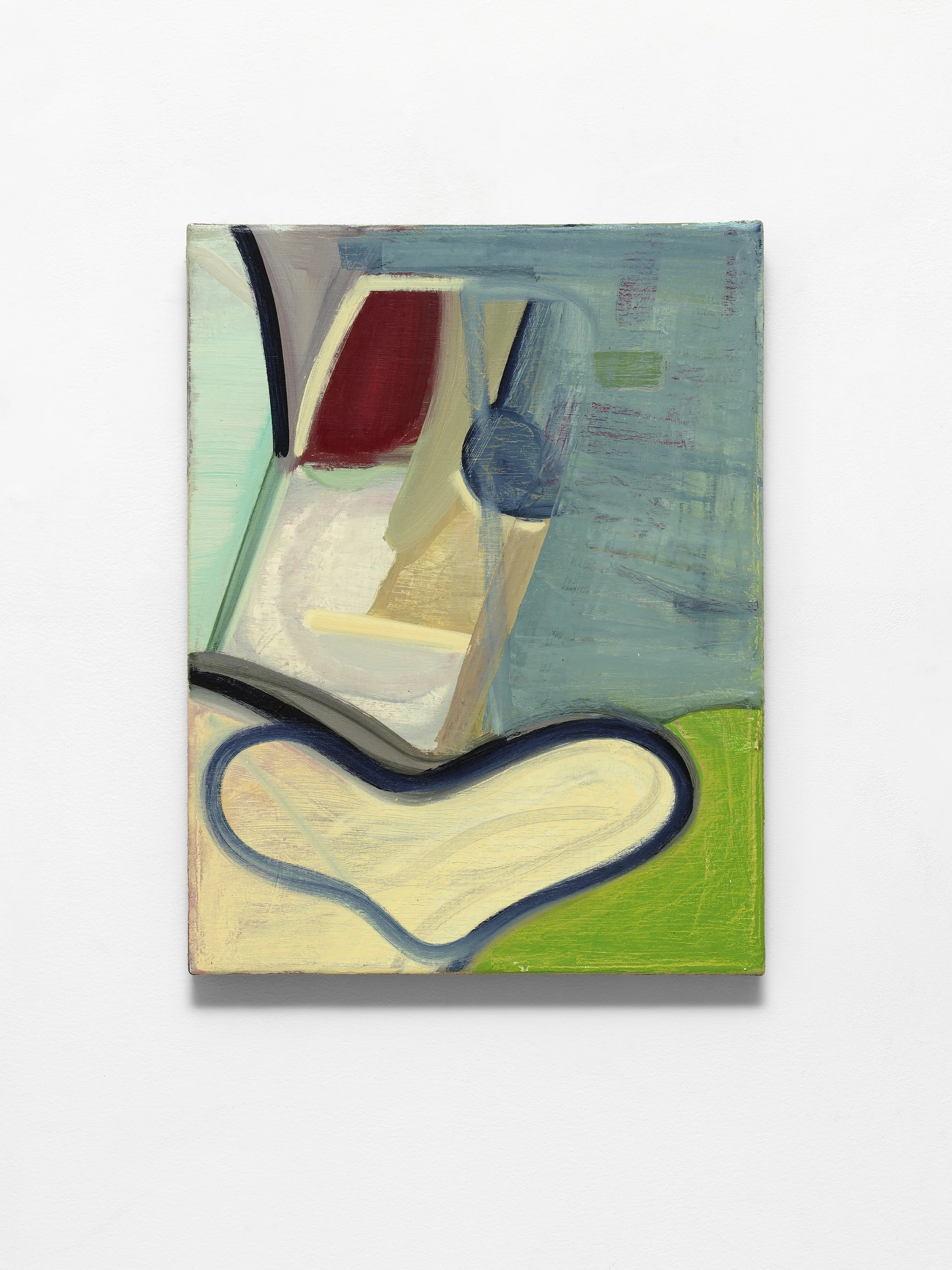
Face with heart, 2024
Oil on canvas. 19 3/4 x 15 in. (50.2 x 38.1 cm)
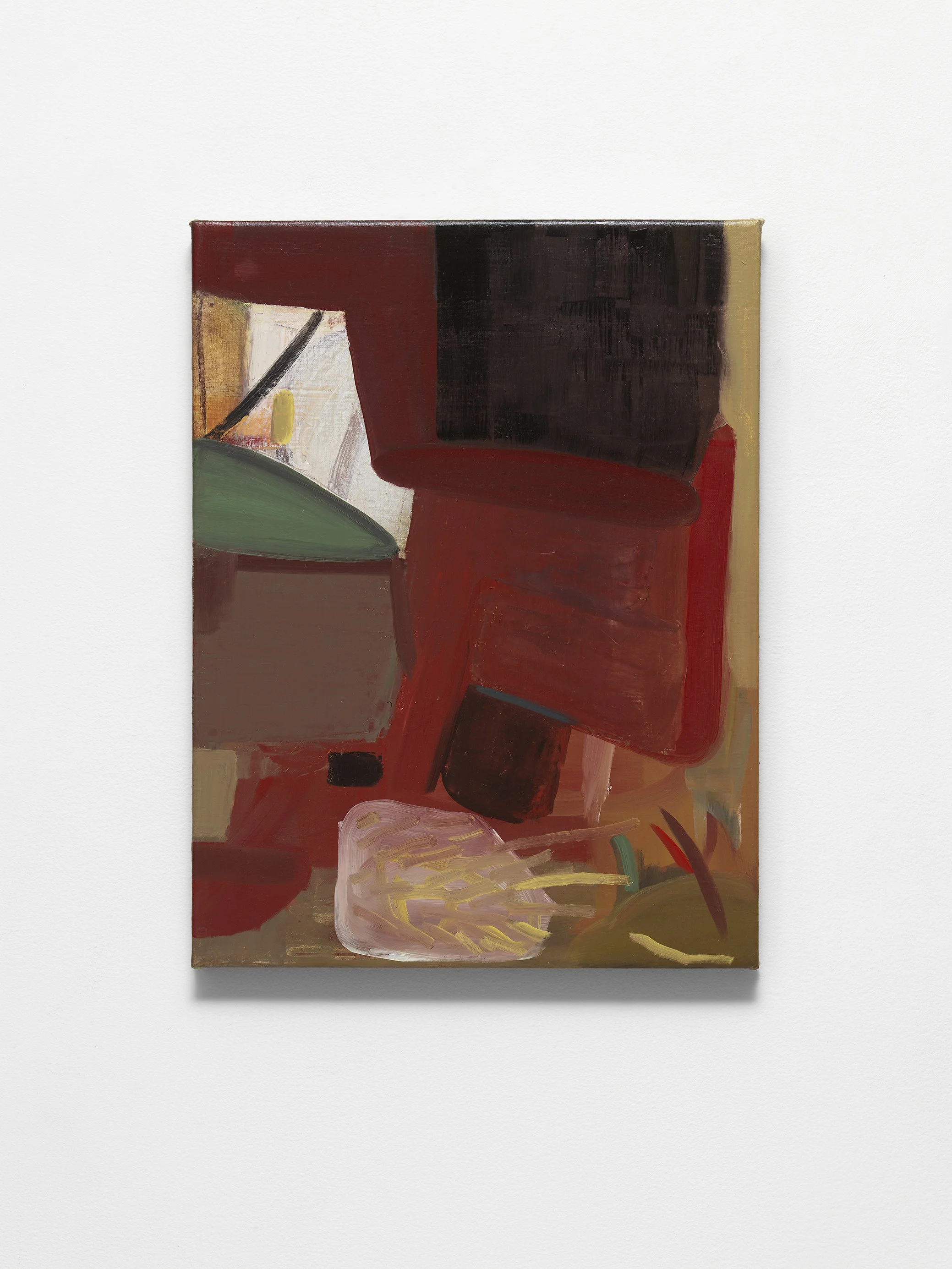
Untitled, 2024
Oil on canvas. 19 3/4 x 15 in. (50.2 x 38.1 cm)
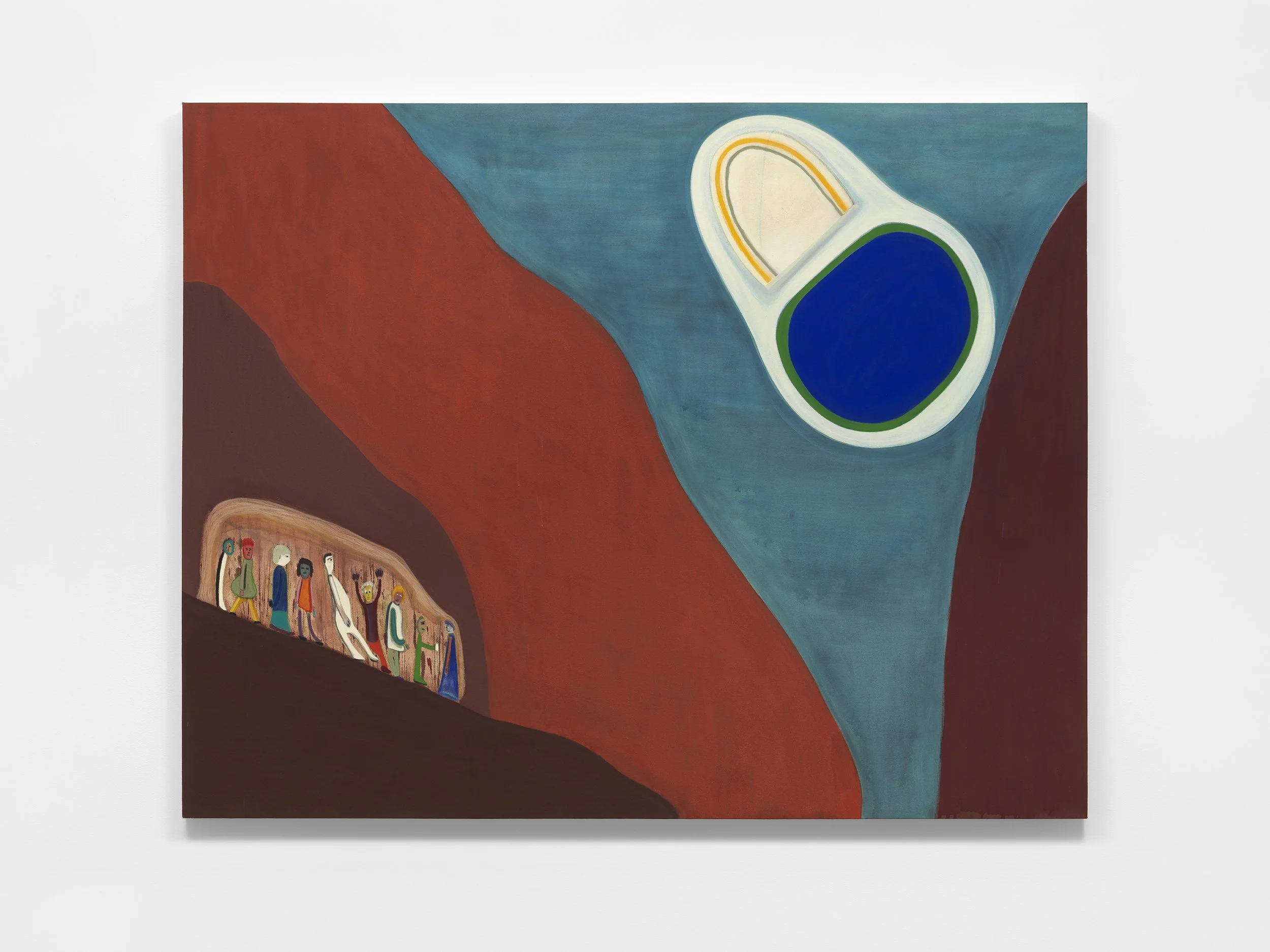
Great Conjunction, 2023
Distemper on canvas. 53 1/8 x 66 7/8 in. (134.9 x 169.9 cm.)
Photos: Dario Lasagni